Click Here for Site Index
 Last
updated 14 August 2013
Last
updated 14 August 2013
But the London and Croydon (Chatham and Gravesend) Bill was rejected by Parliamentary committee in 1845, following an unfavourable report from the Board of Trade.[2] Instead the South Eastern Railway's rival scheme for what has become the North Kent line got the nod. It no doubt helped them that by early 1845 South Eastern had already completed their line from Rochester to Gravesend. In 1857 the East Kent Railway Extension bill was rejected by Parliament after their rival the South Eastern Railway, who had the only line from North Kent to London via Dartford claimed the competition would be injurious to its commercial interests. But it was not to be long before the East Kent Railway would be back.
|
|
The extension bill was resubmitted in 1858 and an important milestone was reached on 23 July 1858 when the East Kent Railway obtained Royal Assent to their bill to join their line at Strood with another company's lines at Bickley.[3] They announced to their shareholders that they hoped to start construction in October that year and placed the construction contract with Messrs Peto Betts and Crampton.[4] This encouraged the abortive Sevenoaks Railway to propose a line from Farningham Road to Sevenoaks[5]. To match their grandiose scheme the East Kent renamed itself the London Chatham and Dover Railway in 1859. On 1 January 1899 the LCD merged with their rival the South Eastern Railway to form the South Eastern and Chatham Railway. |
|
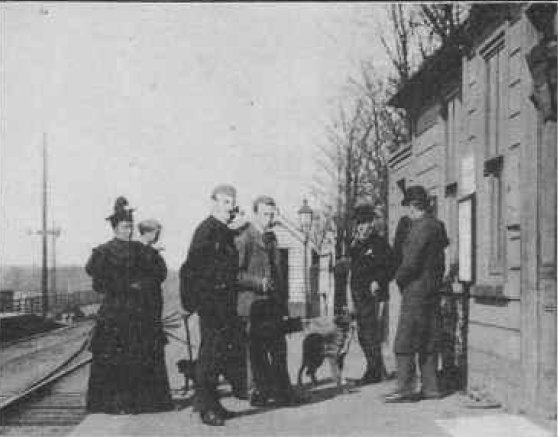
The building of the line was quite an attraction locally, one lady told Rev Bancks in 1927 that " they used to walk down on Sunday afternoons after Church to see how it was getting on."[6]. It was formally opened on 31 October 1860[7] and the first passenger service ran on 3 December 1860. Then 7 trains ran each way on weekdays and 4 on Sundays.[8] It was on our stretch of line that the first prosecution occurred in 1870 for someone unnecessarily pulling the communication cord, when a passenger who had forgotten to alight at Rochester stopped the train at Farningham Road was fined 10 shillings by Dartford Magistrates.[9] Longfield Station, then called Fawkham, was not opened until June 1872, however on 24 May 1866 a chartered train stopped here for the boxing championship of England bout between the holder Jem Mace and Joe Goss. Bancks says the spectators alighted at an earthen platform to the west of the existing station . Contemporary accounts describe spectators alighting onto the rails and having to scramble down a steep bank to a point in the lee of a wood about 200 yards from the Church Prize fighting was illegal at the time so only the organisers knew where they were going. The fact that the railway company had assisted them outraged Longfield's rector, Rev Norton, in a letter to the Times. In the 1870s there were only a handful of trains and 12 season ticket
holders at Fawkham. The 3rd class return fare of 3s 5d (17p) is the equivalent of over
£12 today - cheaper for those travelling in the rush hour, but not for off peak
travellers. Then the only house which could be seen from the station
was Longfield Court. The railway spurred the development of Longfield and later
that of Hartley. |
|
|
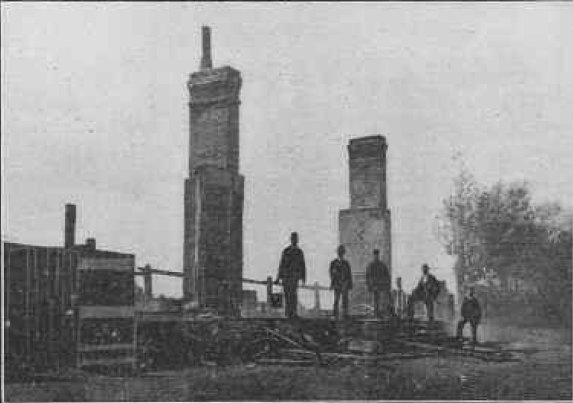
On the night of 11 July 1900[10] the old station burned down, the accident occurred just after midnight one day when the station was all locked up. There was talk of moving the station to Pinden, but in the end the station was rebuilt where it was. Rev Bancks correctly sees the importance of this decision: "there is little doubt that modern Hartley owes its very existence to this tardy decision of the Company to rebuild at Longfield instead of Horton Kirby. I do not believe that the Small Owners, Ltd would, for a moment, have entertained the idea of purchasing and developing the Hartley Estate if the railway station had been as far away as Pinden. |
|
|
The First World War saw a new role for Longfield Station. Often the wounded from the front would come by train to Longfield station before being conveyed to hospital. Charles Ellerby recalls it was a grim sight. Suffering was a great leveller and people felt for all the wounded, friend and enemy alike. One account appeared in the Reporter in 1915 of wounded going from Longfield to the Southern (then called Gore Farm) Hospital: "The Red Cross trains arrived shortly after 5 o'clock, and there being a large body of VAD and St John Ambulance helpers, the 96 men were speedily transferred to motor cars and conveyed to their destination." Some were on stretchers, "The majority, whose wounds were not very serious, appeared cheerful and thankful that they had escaped for the present from the tragedies of war". There was a military escort. Railways fell under government control in the war and it was felt they benefitted from removing wasteful competition. Keen to reduce losses, nationalisation was considered, but instead on 1 January 1923 the South Eastern and Chatham Railway, London and South Western Railway and the London Brighton and South Coast Railway amalgamated to form the Southern Railway, as a result of the Railways Act 1921. |
||||||||||||||||||||
|
Trains from Longfield to London 1914-1947 |
|

|
The big story of the years 1918-39 was the electrification of the line through Longfield. As early as 1921 the South Eastern and Chatham Railway had planned to extend electrification to the line as soon as circumstances permitted. It reckoned that trains could run 40% faster and would allow them to run 60% more trains. However circumstances did not permit at first, but the government authorised the scheme in 1935 on condition that all materials be bought in the UK and from unemployment blackspots if possible[11]. The line was officially opened on 30 June 1939, a year ahead of schedule[12]. The footbridge at the London end of the platform over the railway was built at this time. Electrification meant more trains, faster journeys and regular trains at the same time past each hour, which had not been previously possible. The 54 miles in Kent had cost the Southern Railway £1,750,000. It was an instant success, in the 2 months before war broke out these lines saw a 54,000 increase in passengers and £4,000 in receipts, an increase of 8%[13], when the company reckoned they only needed a 1.2% increase to make electrification pay. In 1932 Longfield got 14 trains on a weekday from London, with an average journey of 56 minutes; in 1947 there were 19 trains and the average time had fallen to 42 minutes. |
Were trains more reliable in the past? We have to be careful when making comparisons because today's railway does not count a train late until it is 5 minutes late! In February 1931 the Southern Railway's London East region covered much of the current Southeastern franchise. 95.97% of steam trains (the sort serving Longfield then) and 98.26% of electric trains ran within 5 minutes of their scheduled arrival, (Source: Southern Railway Magazine, April 1931) In February 2013 Southeastern managed to run 90.4% of trains within 5 minutes of scheduled arrival. Possibly the reason for this could be that over twice as many trains run now on the same amount of track. This is an improvement on Connex's last few years (2000-2003) where annual performance was only around 80%. So the answer is yes! |

Since the war we have seen nationalisation and privatisation of the raiways. Nationalisation occurred on 1 January 1948, the Southern Railway fairly seamlessly became the Southern Region of BR. In 1982 BR reorganised itself into "sectors"; this meant that all London Commuter lines were transferred to Network South East. John Major's government wished to privatise the railways, but chose a franchise model rather than a sectorial one. Thus in October 1996 train services in Kent and South East London were taken over by Connex South Eastern. Connex was not a popular franchise, one of their first acts was to shorten many trains serving Longfield Station. Their contract was supposed to run for 15 years but the Strategic Rail Authority cancelled the franchise in November 2003, citing overbidding for the contract in the first place and poor financial management.
The Rail Modernisation Plan (1955) proposed significant investment in the railways. One of its chief aims was to replace steam. They acknowledged that it was always the intention to extend electric trains in the Southern Region and earmarked £25 million to extend the electric lines by 250 miles. In 1959 the line beyond Gillingham was electrified and colour signals introduced to replace the old semaphore type. This involved the abolition of the signal boxes at Fawkham Junction and Longfield Sidings.
Since the war there has been considerable local development, and this is reflected in the passenger usage at Longfield. The figures since 1997 show the number of passengers boarding trains at the station, the 1938 and 1961 figures probably show this too. The effects of the recession since 2008 are evident in falling passenger numbers.
Station |
1938 |
1961 |
1997/8 |
2002/3 |
2004/5 |
2005/6 |
2006/7 |
2007/8 |
2008/9 |
2009/10 |
2010/11 |
2011/12 |
Percent season ticket travel |
Percent reduced fare travel |
|
Swanley |
125,275 |
254,277 |
597,165 |
616,609 |
644,447 |
637,052 |
662,267 |
672,923 |
656,820 |
623,107 |
601,271 |
605,478 |
51.4% |
31.3% |
|
Farningham Road |
11,778 |
32,109 |
89,389 |
84,848 |
88,641 |
88,392 |
98,989 |
110,957 |
105,801 |
101,435 |
103,375 |
100,126 |
59.9% |
23.1% |
|
Longfield |
17,277* |
65,332 |
244,551 |
221,175 |
231,085 |
231,886 |
239,401 |
257,489 |
255,210 |
232,728 |
237,367 |
250,330 |
54.2% |
31.1% |
|
Meopham |
n/a |
n/a |
130,405 |
131,306 |
143,029 |
140,090 |
152,504 |
163,155 |
162,821 |
146,621 |
146,201 |
148,310 |
60.1% |
25.5% |
|
Sole Street |
n/a |
n/a |
29,440 |
40,258 |
40,337 |
38,148 |
43,253 |
49,865 |
47,078 |
39,900 |
30,174 |
30,612 |
60.0% |
24.6% |

A line to link Gravesend with Farningham Road was first proposed in 1863 by the Gravesend and Farningham Railway. They proposed a railway from about where St James's Street in Gravesend is now, a point near the Shrubbery Road Bridge in South Darenth[14]. They promoted a bill in Parliament, but this was withdrawn. The idea was revived in the 1880s. And on 30 June 1883 the first turf was cut in a field near Stuart Road, Gravesend by Lady Waterlow, wife of the deputy-chairman of the London Chatham and Dover Railway and MP for Gravesend.[15] The company also constructed the pier at Gravesend West Street, by which they hoped to get passenger traffic bound for ocean liners and also the Gravesend fish trade.[16] It opened to public traffic on 10 May 1886.[17] The line originally had stations at Gravesend West Street, Rosherville, and Southfleet before joining the main line at Fawkham Junction. Rosherville Gardens was then a popular tourist destination, in 1886 you could get returns from London and admission for 1s 9d[18]. But their closure in 1910 led to the closure of the Station in 1933. Longfield Halt station was added on 1 July 1913. It was at the top of Whitehill Road, where steep stairs by the bridge led to two wooden platforms. It had no ticket office, you had to buy tickets on the train. In reality the line was an example of duplication of services caused by cut-throat competition between companies, leading British Rail to look at closure long before Beeching. In 1952 they estimated that the revenue of the line was £1,021 p.a. but the costs alone of operating the trains was over £6,000. It was reckoned closure would save BR over £11,000 yearly. In 1950 the line had a Monday to Friday service of 5 trains in each direction, with 10 trains on Saturdays. Annual usage was 21,069 passengers, with 57% of traffic local to the line. In the whole year Longfield Halt only had 323 local journeys and 29 journeys beyond the branch line - barely more than 1 passenger a day, althought it had 6 regular passengers who preferred to buy their tickets the night before at the main Longfield Station. This was even though the fare from Longfield was cheaper by train than by bus. A traffic census at Gravesend West on Saturday 23rd and Wednesday 27th February 1952 found not one passenger coming from or going to Longfield Halt. Southfleet was not much better with just 1,563 journeys. The busiest train was the Saturday 13.08 train from Farningham Road to Gravesend West, but this only had 14 passengers After internal approval the proposed closure was referred to the Transport Users Consultative Committee in March 1953, who approved closure subject to additional local bus services being provided. Objections were received from Dartford Rural District Council, 3 parish councils (not Hartley or Longfield) and a group of 4 commuters who travelled from Orpington to Gravesend. The latter objection led them to conduct a new traffic census in the weeks before closure, once again Longfield Halt only averaged one passenger per day. |
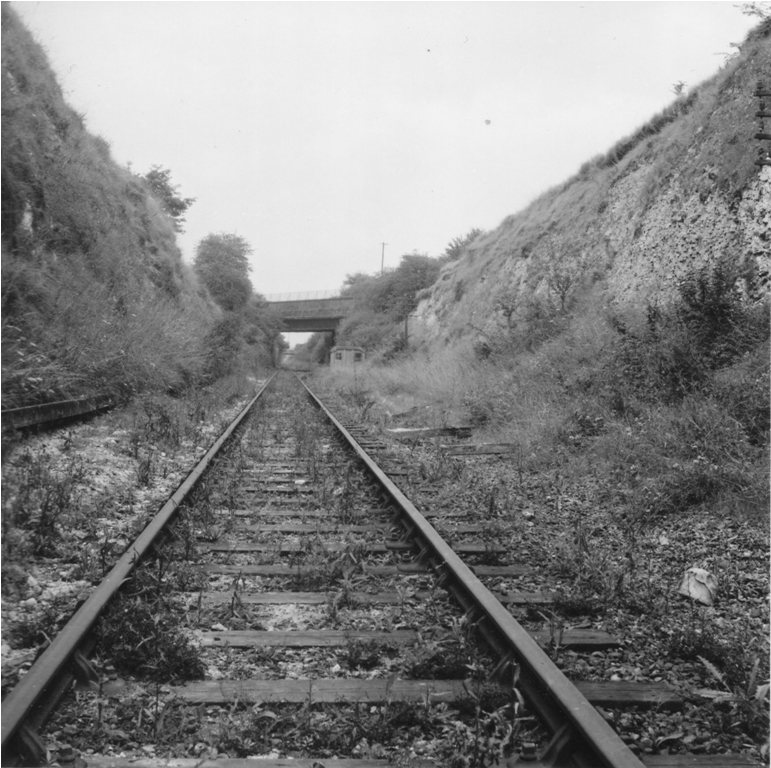
Site of Longfield Halt Station, c1960
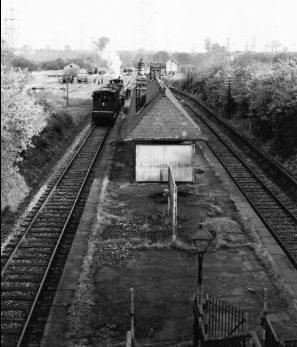
Southleet Station, 1957 |
|
Passenger services ceased on 3 August 1953 - well before Beeching. See Youtube video of trains at Gravesend West and Longfield Halt in 1952 with notice of closure. Following closure to passenger traffic, the line was used for goods and the occasional passenger special until 1968, and then for a further eight years for coal trains to a coal concentration depot at Southfleet. After final closure in 1976, it was hoped to run a steam railway there, but the North Downs Steam Railway were unable to acquire the line. Since then the sections of the line have had differing fortunes. The section from Longfield to Southfleet has been reused for Phase 1 of the Channel Tunnel Railink, but following completion of phase 2 it is now little used. The bridge over the A2 was taken down in 1991,while much of the route in Gravesend has been incorporated into the Thames Way road. The last vestiges of Gravesend West Street station were demolished in 2006. |
|
Notes:
[1] London Gazette 16 November
1844
[2] London Gazette 17 Jan 1845; Morning Post 3 July
1845
[3] Daily News 26.8.1858
[4] Daily
News 31.8.1858
[5] Daily News 20.1.1859
[6]
Parish
Magazine June 1927
[7] Standard 2.11.1860
[8]
Daily News 7.12.1860
[9] Hampshire Advertiser 2.3.1870
[10]
Leicester Chronicle 17.7.1900
[11] Times 5.11.1935
[12]
Times 26.2.1937; Times 1.7.1939 ("Triumphal Train")
[13]
Times 21.3.1940
[14] Daily News 16.4.1863; London
Gazette 28.11.1865
[15] Pall Mall Gazette 2.7.1883
[16]
Pall Mall Gazette 11.8.1884
[17] SE Gazette 10.5.1886
[18]
Standard 2.8.1886